Have you ever wondered if a trip to space could soon be as routine as a weekend getaway by plane? Lately, the big names in space travel have been dropping news that makes our skies seem a lot busier, and a whole lot more exciting. New flight schedules are being planned and fresh challenges keep cropping up, and it feels like the dream of perfecting space missions is moving at a thrilling pace.
In this little chat, we’ll break down the latest updates and headlines that are reshaping how we see the cosmos. Imagine a future where heading for the stars feels just as normal as catching a flight, exciting, isn’t it?
Latest Space Travel Headlines and Launch Updates
Space news is buzzing with the thrill of liftoffs and record-breaking journeys. Every second counts online, and watching a rocket countdown feel like a fresh burst of wonder really brings home how far we've come, imagine engineers once relying on a simple sundial instead of fancy electronics to time a launch!
Recent updates tell us that the Boeing Starliner crew flight has been pushed to early 2026 following a long testing run at White Sands. Meanwhile, SpaceX is all set to launch its SXM-10 satellite from Cape Canaveral at 12:54 a.m. EDT on June 7, 2025, another careful step in their busy schedule after a mission just six months back.
Other headlines add to the excitement. For instance, ispace’s Resilience lander ran into trouble with its laser altimeter during a Moon landing attempt on June 5, 2025 at 3:17 p.m. EDT. And there’s SpaceX’s milestone: their 500th Falcon rocket orbital mission lit up the sky at 4:40 p.m. PDT from Vandenberg on the special anniversary of Falcon 9. Not to be left out, Rocket Lab also made waves with its seventh Electron flight carrying the new BlackSky Gen-3 satellite from Mahia on June 3 at 11:57 a.m. NZT.
- Boeing Starliner flight delayed to early 2026 after rigorous testing at White Sands.
- SpaceX’s SXM-10 satellite launch scheduled for June 7, 2025 at 12:54 a.m. EDT from Cape Canaveral.
- ispace’s Resilience lunar lander faced a hiccup with its laser altimeter during its Moon landing attempt on June 5, 2025.
- SpaceX’s 500th Falcon rocket orbital mission launched on June 3, 2025 at 4:40 p.m. PDT from Vandenberg, celebrating the Falcon 9 anniversary.
- Rocket Lab’s seventh Electron mission, carrying BlackSky’s next-gen Gen-3 satellite, lifted off on June 3, 2025 at 11:57 a.m. NZT from Mahia.
Space Travel Agency Directives and Mission Briefings

Imagine catching a last-minute flight that arrives right on time, well, that's exactly what the U.S. Space Force and Lockheed Martin pulled off. At 1:37 p.m. EDT, they launched a brand new GPS satellite on a Falcon 9 rocket. With only three months to prepare since the government gave the green light, this move shows just how smoothly different space agencies can work together, kind of like friends planning an impromptu weekend getaway.
Down at Cape Canaveral, things are buzzing with plans for a big summer 2025 expansion. Picture a busy hub that’s not just meeting today’s needs but also welcoming new partners into the mix, both NASA and the Space Force are gearing up for more adventures. Meanwhile, NASA is tweaking its plans with the Fiscal Year 2026 budget. They’re pouring more funds into lunar and Mars missions while paring down some parts of their Moon-to-Mars strategy, sort of like streamlining a travel itinerary to make room for extra sightseeing.
All these changes lean into a wave of fresh policy moves. Just think of the recent twist when NASA Administrator Jared Isaacman’s nomination was pulled back just days before confirmation. Now everyone’s watching for his successor to step in. With the new plans at Cape Canaveral and shifts at NASA, it feels like we're on the brink of a revamped space exploration plan, one that's built on teamwork and smart, quick decisions. The vibe is clear: future human space flights will be driven by solid government planning and brilliant interagency coordination, much like the perfect adventure requires both a great plan and a spirit of spontaneity.
Commercial Space Travel Updates and Private Enterprise Trends
Private companies are inspiring us by turning space travel dreams into reality. One exciting breakthrough is from a Chinese startup that captured everyone’s attention by gently landing its Yanxinghe-1 booster in the ocean, a brilliant move toward reusing rockets. It’s as thrilling as hearing a countdown and watching that big launch lift off.
Meanwhile, not every flight goes perfectly. SpaceX’s Starship set out on its ninth test flight with much promise, but its second stage unexpectedly lost control mid-re-entry. These moments remind us that even the boldest plans can have surprising twists.
Axiom is stepping up its game with crew training simulations planned for late 2025, adding another spark to the private space travel story. And there’s a buzz in the halls, Blue Origin might be planning some test ascents, and Virgin Galactic is gearing up for its very first lift, all set to stir things up in the commercial space scene.
- Chinese startup lands its Yanxinghe-1 reusable booster in the ocean.
- SpaceX’s Starship test flight saw its second stage lose control during re-entry.
- Axiom schedules crew training simulations for a commercial mission in late 2025.
Space Travel Science News: Telescope Breakthroughs and Cosmic Findings
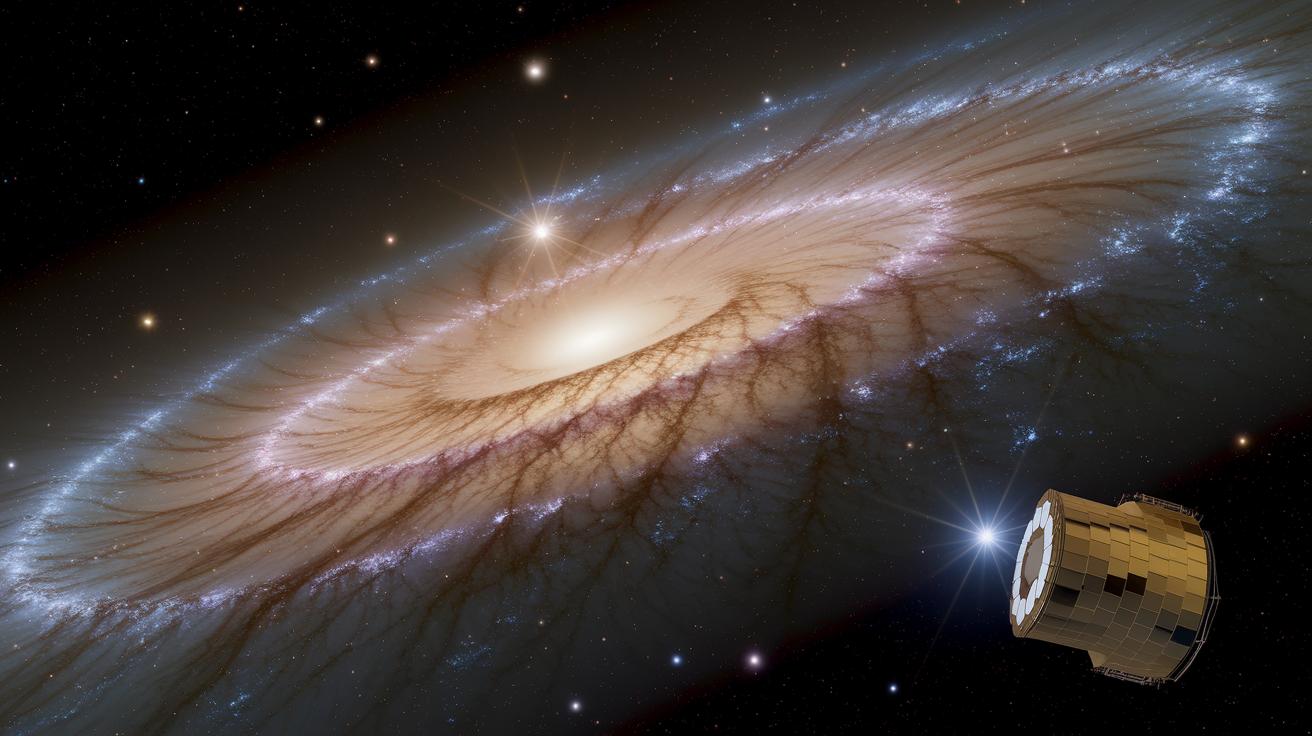
Wow, the universe never ceases to amaze us. Recent space observations are giving us a fresh look at the cosmos. The James Webb Space Telescope (JWST) discovered that two key measurements, Cepheid variable stars and the cosmic microwave background, are closer than we had expected. This overlap might be a clue in solving the long-standing Hubble puzzle.
And there’s more to share. JWST also revealed that Pluto has a lively, changing atmosphere, which is quite different from what we see on other planets. Meanwhile, the Event Horizon Telescope has been busy too. It measured the spin and the rate at which gas falls into the giant black hole in galaxy M87, shedding light on the incredible energy churning at its core.
Next, some stunning images of ancient galaxies have been captured by JWST. These galaxies, magnified by the massive cluster Abell S1063, appear from an era about 4.5 billion light-years away. And to round off this cosmic adventure, astronomers detected ASKAP J1832-0911, the first long-period radio burst that pulses X-ray and radio signals every 44 minutes.
| Finding | Details | Date | Instrument |
|---|---|---|---|
| Hubble tension narrowing | Cepheid and CMB measurements now show overlapping error bars | 2025 | JWST |
| Pluto’s atmosphere | Reveals a dynamic, lively atmosphere unlike other planets | 2025 | JWST |
| M87 black hole | Spin and high accretion rate measured, highlighting intense activity | Recent | Event Horizon Telescope |
| Ancient galaxies | Amazing cosmic images boosted by Abell S1063’s gravitational lensing | 2025 | JWST |
| Radio transient | ASKAP J1832-0911 pulses X-ray and radio waves every 44 minutes | 2025 | ASKAP |
Space Travel Technology Insights: Propulsion, Vehicles, and Next-Gen Projects
Space travel is getting an exciting makeover with fresh engine ideas that could totally change our journey through space. New rocket designs, like one called the Centrifugal Nuclear Thermal Rocket, might almost double the push we get compared to current tech. A recent study by LPSC looked into using fission power to boost deep-space missions and found promising signs both technically and financially. Imagine going from a slow ride on a tricycle to zooming on a high-speed motorcycle down a twisty road!
At the same time, other projects are exploring how to improve reentry methods and even dip into the search for life beyond Earth. One plan envisions a group of satellites watching the sun, ready to warn us when solar storms are on the way, sort of like getting a weather alert for space. Plus, the PhotSat CubeSat project is gearing up to scan the entire sky in ultraviolet and visible light every few days. And with the Raman Cube Rover, scientists plan to study moon rocks right where they lie using a handy light-analysis technique. Each of these projects is a step toward safer, more efficient, and truly adventurous space trips.
| Project | Description |
|---|---|
| 1. CNTR Design | This design aims to almost double our current rocket push, making space travel much more efficient. |
| 2. Fission-Powered Propulsion Study | This study checks out if using fission power for deep-space journeys is both technically sound and budget-friendly. |
| 3. Sun-Monitoring Constellation | A planned network of satellites that will keep an eye on the sun to alert us to any incoming solar storms. |
| 4. PhotSat CubeSat | This mini-satellite project will watch the entire sky in both ultraviolet and visible light every few days. |
| 5. Raman Cube Rover | A rover set to study lunar rocks on-site by using Raman spectroscopy, which examines light reflections. |
Final Words
In the action, we explored the latest rocket liftoff countdowns, government directives, private sector updates, cosmic science revelations, and next-gen tech insights. Each section offered a clear look at evolving missions and strategies that shape news about space travel today.
This post delivered a quick spin through headlines, policy shifts, private milestones, telescope findings, and breakthrough propulsion projects. Here's to more clear insights and a bright future in space travel!
FAQ
What are the latest news about space travel and the universe?
The question about space news highlights new rocket launches, satellite missions, and telescope breakthroughs that keep us updated on both space travel headlines and fresh cosmic findings.
What are the recent breakthroughs involving the James Webb telescope?
The question about James Webb Space news reveals that recent observations have refined celestial measurements, uncovered details about Pluto’s atmosphere, and captured images of ancient galaxies offering more insight into our cosmos.
Is one hour in space equivalent to seven years on Earth?
The question about time differences in space shows that spending an hour in space does not literally equal seven years on Earth; the effect depends on specific factors like speed and gravity, and real differences are minimal.
What is the most recent discovery about space?
The question about the latest space discovery points to several advances, including enhanced telescope data and new satellite findings that provide clearer views of ancient galaxies and unusual cosmic events.
What will happen in 2025 regarding space missions?
The question about 2025 events in space indicates a busy schedule with planned launches from SpaceX, Boeing, Rocket Lab, and other agencies, promising fresh mission updates and significant test flights.
Is space travel really going to happen?
The question about the future of space travel confirms that both government and private companies are making progress, with new missions and commercial test flights signaling that space travel is moving toward greater accessibility.
How are science and technology shaping space exploration?
The question about science and technology in space explains that advancements in propulsion systems, telescope imaging, and artificial intelligence are enhancing research methods and safety in upcoming missions.
How do chemical reactions play a part in space missions?
The question about chemical reactions highlights that controlled reactions power rocket fuels and engines, which are critical for liftoff, maneuvering, and maintaining the performance of space vehicles.