
Have you ever noticed how one simple word can change a dull airport check-in into a warm hello from a friend? Travel isn’t just about learning phrases; it’s about making real connections. Imagine asking for directions in a way that lights up faces and eases your travel jitters.
This guide is like a friendly chat where we break down everyday terms that help you speak clearly and feel confident. Get ready to fine-tune your travel vocabulary and sprinkle a little extra fun into every conversation on your adventure.
travel dictionary: Elevate Your Travel Lingo
Travel basics are your first step to connecting with locals and making your adventure smoother. Knowing simple words like hello, thank you, and help can quickly set the vibe for friendly encounters at busy airports, cozy hotels, or even a small local eatery. These words aren’t just phrases, they open the door to respectful and heartfelt interactions wherever you go.
Everyday expressions become your travel sidekicks. Whether you need directions, are checking into a room, or simply greeting someone, these terms help ease any travel jitters. They can calm you down in a tricky situation, save you time when you're in a rush, and even lead to delightful cultural chats that add extra flavor to your journey.
| Term | Definition | Pronunciation | Example |
|---|---|---|---|
| Greetings (“hello”) | A friendly word to start conversations | heh-loh | “Hello, how are you?” |
| Expressions of gratitude (“thank you”) | A polite way of showing appreciation | thangk yoo | “Thank you for your help!” |
| Asking for directions (“Where is…?”) | A phrase to inquire about a location | wair iz | “Where is the market?” |
| Checking into accommodation (“check-in”) | The process of registering at a hotel | chek-in | “I need to check-in, please.” |
| Transportation terms (“bus, train”) | Words used to identify common travel modes | bus: buhs; train: trayn | “Take the bus to the city center.” |
| Emergency requests (“help!”) | A call for urgent assistance | help! | “Help! I need assistance immediately.” |
Mastering these simple phrases makes exploring new places less intimidating and way more fun. With just a handful of words, you can ditch the confusion, enjoy smoother travels, and truly connect with the heart and soul of a new destination.
Pronunciation and Usage in the Travel Dictionary

Getting your pronunciation spot-on can boost your confidence and help you connect with locals effortlessly. When your words come out clear, you dodge mix-ups, from asking for directions to placing an order at a cozy café. It lets you feel at home with new words, even if you’re just dipping your toes into a language. Pretty soon, every conversation becomes part of the adventure.
IPA vs. Simplified Phonetics
The International Phonetic Alphabet is like a detailed map of every sound, perfect when you need extra guidance, especially in languages where tiny sound shifts make a big difference. But if you’re on the move and need a quick tip, simplified phonetics gives you a friendly look at how to say words right.
- Listen to native speakers with audio clips
- Practice with phonetic transcriptions
- Record your voice and compare
- Break words into bite-sized syllables
- Use apps that focus on pronunciation
Carve out a few minutes each day for these drills and watch your travel chats get smoother. Soon, speaking with locals won’t just be easy, it’ll be an adventure in itself.
Bilingual Translations in the Travel Dictionary
Learning a new language while traveling can be a real adventure. Seeing phrases side by side shows you the practical side of language, the kind of tool you need to quickly pick up local signs, menus, and everyday chats. Imagine reading your favorite greetings in Spanish, French, and Italian, and suddenly understanding a bustling airport or a lively market. When you check a few sources, it keeps your language skills sharp and boosts your confidence with every friendly conversation.
Here's a quick list to help you out:
| Phrase | Translations |
|---|---|
| Hello | Hola, Bonjour, Ciao |
| Thank you | Gracias, Merci, Grazie |
| Where is…? | ¿Dónde está…?, Où est…?, Dov’è…? |
| How much? | ¿Cuánto cuesta?, Combien ça coûte?, Quanto costa? |
| Check-in | Registro, Enregistrement, Check-in |
| Help! | ¡Ayuda!, À l’aide !, Aiuto! |
Using an offline phrasebook is also a travel lifesaver. Whether it's a little printed guide or a set of saved phrases on your phone, it works as a backup for those moments when the internet is being a bit unpredictable. With this tool in hand, you can chat confidently and soak up every moment in every corner of the world.
Cultural Insights in the Travel Dictionary

When you hear local phrases, you're not just swapping words, you’re catching a glimpse of everyday traditions and the local way of life. Words here carry extra meaning, shaped by history and the rhythm of daily routines. Imagine how a simple thanks or greeting can hint at customs that have evolved for centuries. For a deeper dive, check this cultural history of exotic destinations.
In Italy, the language is as warm as a sunny afternoon. Take "prego" for example, it might mean you're welcome, a polite please, or even a nudge to get going, depending on the tone and setting. And "scusi" is the friendly way to grab someone’s attention in a bustling piazza or a quiet café. These small expressions, paired with a kind smile, open the door to real connections with locals.
Over in Japan, politeness isn’t just a word, it’s a whole way of life. "Sumimasen" is like a traveler's Swiss knife; it works as an excuse me, a thank you, or even an apology when moments call for it. Coupled with "arigatō" and the graceful art of bowing, every interaction feels smooth and respectful, enriching your journey with thoughtful exchanges.
Then there’s Spain, with its lively and varied expressions. Whether it's a cheery "hola" or a friendly "buenas," each greeting carries a local twist. Ever heard "vale" used instead of the usual "OK"? It's a little tidbit that shows off the relaxed and informal vibe of Spanish conversations, making every hello feel personal and warm.
Embracing these local expressions is like unlocking secret doors to smoother interactions and genuine bonds with those you meet on your travels.
Slang and Abbreviations in the Travel Dictionary
When you're off on a new adventure, knowing a bit of travel slang can really smooth out your planning. It’s like having a secret map that helps you understand travel chatter, from quick references like TSA to catching a red-eye. Imagine booking your flight or figuring out hotel deals without getting lost in confusing lingo!
Here are some handy terms to keep in your travel toolkit:
- TSA – airport security agency (like when you say, "I cleared TSA in five minutes.")
- ETA – arrival estimate (for example, "My ETA is 8:30 PM.")
- red-eye – a late-night flight (as in, "I took the red-eye to save on a night’s accommodation.")
- layover – a stop between flights (for instance, "I have a two-hour layover in Doha.")
- per diem – a daily meal allowance (think, "The per diem covers lunch and dinner.")
- hostel – budget lodging (such as, "I stayed in a hostel dorm with six beds.")
- jet lag – travel fatigue (like, "I experienced jet lag after crossing three time zones.")
While these fun terms add a playful twist to your travel talks, it's best to keep them out of formal settings like business meetings or official travel documents. That way, your message stays clear and easy to understand, no matter where your journey takes you.
Digital Tools and Printable Guides in the Travel Dictionary
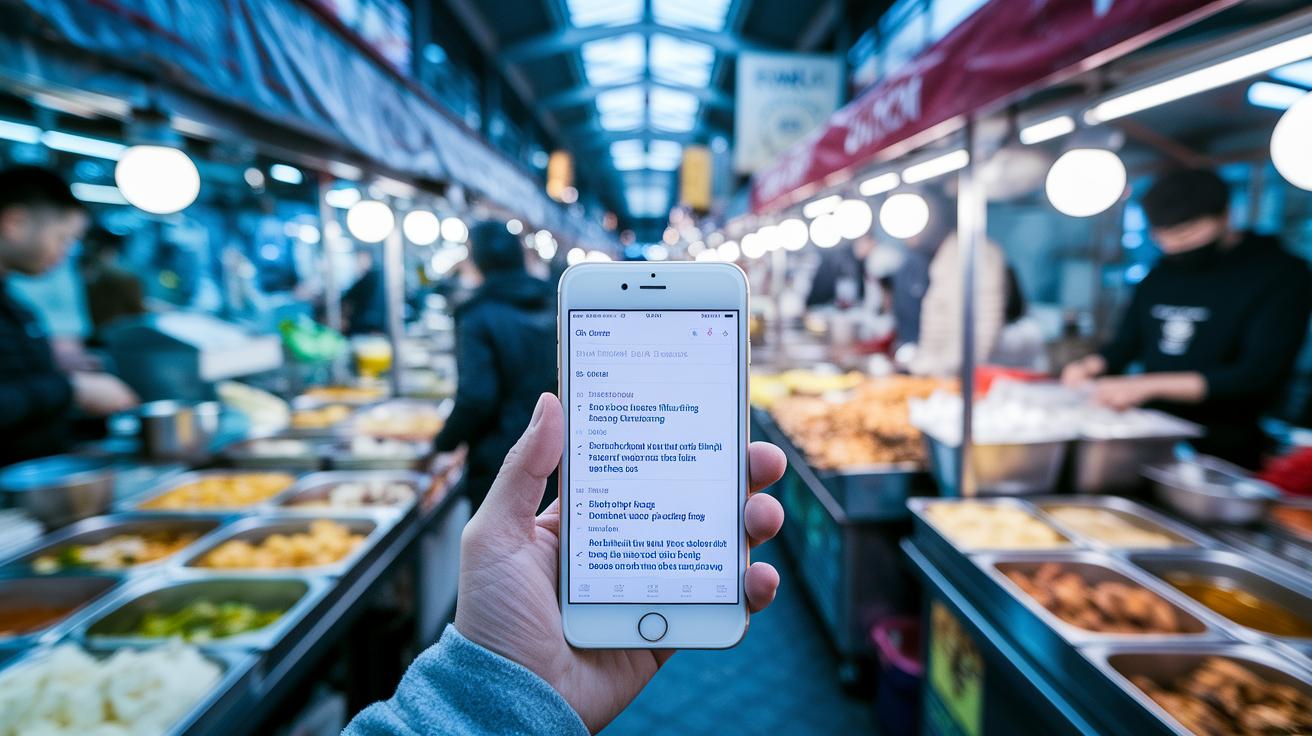
Traveling becomes so much smoother when you have handy language tools at your fingertips, even when you're off the grid. Imagine using a mobile dictionary app that lets you listen to and read words wherever your journey takes you. And sometimes, there's just something special about flipping through a printed PDF lexicon or a pocket-sized phrase card when you need that tangible backup.
Picture yourself in a bustling market where the aroma of street food fills the air. In that moment, these tools can clear up any language mix-ups and even let you dive into fun, historical language tidbits, like a nifty Time Machine that blends classic phrases with today’s lingo.
Here’s a quick guide to what you might need:
| Tool | Feature |
|---|---|
| Offline Translation Apps | Voice and text support for quick word lookups |
| PDF Lexicons | Organized by topic for easy browsing |
| Pocket Phrase Cards | Handy guides with phonetic help in a small format |
| Browser Add-Ons | Instant word lookup while you’re exploring online |
Before you set off, it’s a smart move to sync your downloads and back up your files to the cloud. That way, even if your device runs low on battery or you end up in a spot with spotty connectivity, you’ll still have your travel dictionary ready when you need it. It’s like having a safety net that lets you focus on enjoying every exciting moment without the stress of a language barrier.
Final Words
In the action, this blog post breaks down a handy travel dictionary for real-world use. It covers everyday greetings, simple pronunciation tips, bilingual phrases, and local expressions that smooth interactions abroad. We even looked at casual slang and handy tech tools so your trip planning is as smooth as possible.
Take these insights and transform your travel vocabulary into a practical guide for your next trip. Enjoy crafting a travel dictionary that makes every new locale feel a bit more like home.
FAQ
What vocabulary is included in a travel dictionary and what travel words are commonly used?
The travel dictionary covers basic words like greetings, directions, lodging terms, and emergency calls. It gathers everyday phrases that help travelers communicate smoothly and connect with locals.
What does travel mean in Hindi and how is it understood?
The travel meaning in Hindi points to the act of moving between places, often called “यात्रा.” It represents the idea of exploring different locations and is commonly used in everyday cross-cultural conversation.
Is travel used as a noun or a verb, and can you provide usage examples?
Travel is employed as both a noun and a verb. For instance, “My travel plan includes stops in several cities” (noun) and “I love to travel during the summer” (verb) illustrate its flexible use.
What are 10 sentences about travelling and what do they offer?
Ten sentences about travelling provide simple examples that show different ways to describe movement, experiences, and challenges. They help learners see the language in action and understand travel contexts easily.
What are travel quotes and how do they inspire people?
Travel quotes fill short statements with wisdom and inspiration. They capture the charm of exploring new places, encouraging travelers to appreciate life’s moments while sparking enthusiasm for seeking out unique experiences.
What is travelling in basketball and why does it matter?
Travelling in basketball describes a rule violation when a player moves their feet illegally while holding the ball. This rule ensures fairness on the court and keeps the play both safe and exciting.
What are 10 synonyms for travel and why are they useful?
Ten synonyms for travel include trip, voyage, tour, excursion, trek, expedition, pilgrimage, outing, jaunt, and roaming. These alternatives provide variety, helping you describe travel in different and colorful ways.
What is the slang word for travel and how is it used?
The slang word for travel is sometimes expressed as “hit the road.” This casual phrase is used among friends to indicate setting off on a trip with a relaxed, informal tone.
What is considered the most beautiful word for travel and why?
The most beautiful word for travel is often “wanderlust.” It captures a deep desire to explore new places and experience life, evoking both emotion and passion in every traveler.