Ever felt that little flutter of uncertainty when trying to speak another language on your travels? Learning a few basic German phrases can boost your confidence and make your journey feel more like a friendly chat with a local. Imagine stepping into a quaint shop, greeting the shopkeeper with a cheerful Guten Morgen, and getting a warm smile in return.
With just a handful of simple words at your side, those confusing moments quickly turn into genuine, heartwarming exchanges. This guide is packed with easy-to-use words and phrases to help you strike up a conversation, ask for directions, and handle everyday situations while exploring Germany. It’s all about making your adventure smoother, more enjoyable, and filled with memorable encounters.
Must-Know German Travel Phrases
If you're exploring Germany, learning a few friendly phrases can really boost your confidence on the go. Using these expressions, you'll be able to communicate politely by using the formal "Sie" when needed. Keep this little toolkit handy, and soon you'll be greeting locals, asking for directions, and handling everyday moments with ease. Picture yourself saying "Guten Morgen" to a shopkeeper or asking "Wo ist die Toilette?" in a busy station, you'll sound prepared and earn a smile.
| German Phrase | English Translation | Pronunciation |
|---|---|---|
| Guten Morgen | Good morning | goo-ten mor-gen |
| Danke | Thank you | dan-kuh |
| Bitte | Please | bit-teh |
| Wie geht’s? | How are you? | vee gates |
| Ich spreche kein Deutsch | I don’t speak German | ikh shpre-khe kīn doich |
| Ich verstehe nicht | I don’t understand | ikh fer-shtay-he nikht |
| Hallo | Hello | hah-lo |
| Auf Wiedersehen | Goodbye | owf vee-der-zay-en |
| Sprechen Sie Englisch? | Do you speak English? | shpre-khen zee eng-lish |
| Wo ist die Toilette? | Where is the restroom? | voh ist dee toi-let-te |
Navigational Expressions and Asking Directions in German
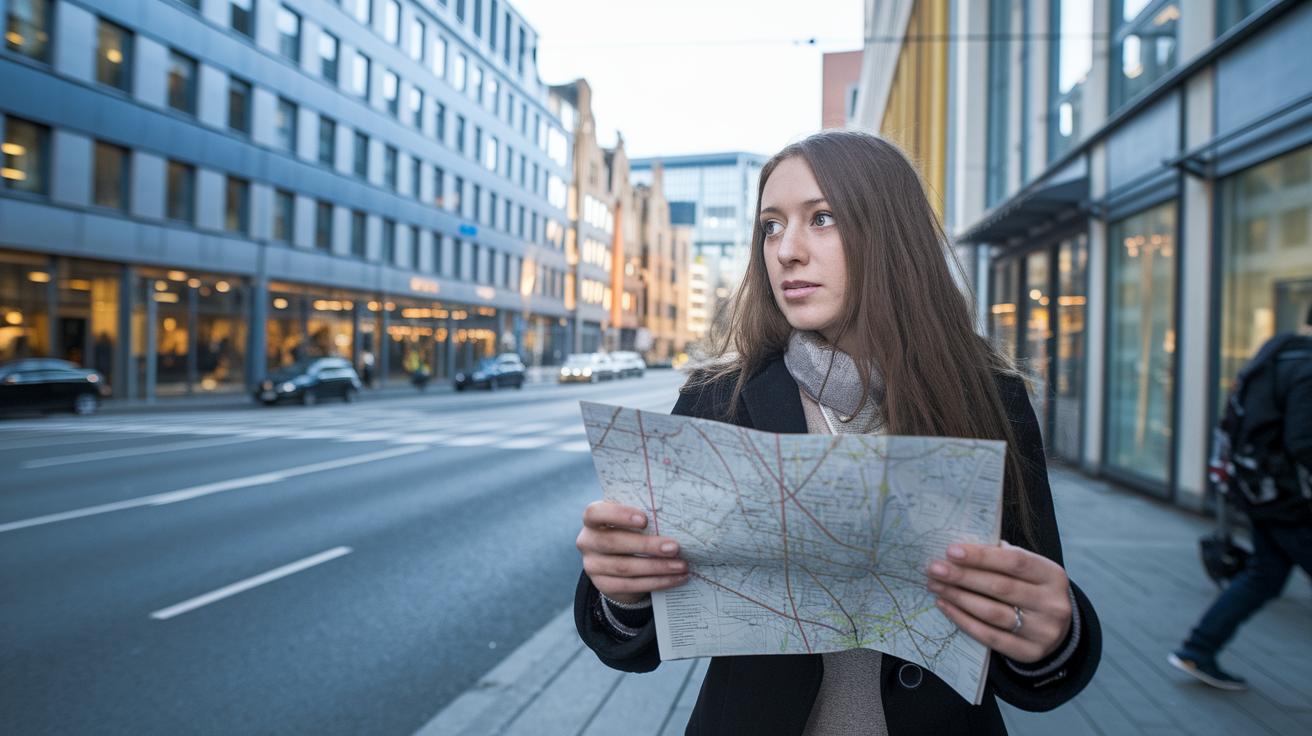
When you're wandering through German cities, a few handy phrases can make all the difference. Chatting with locals using polite expressions turns confusion into clarity and helps you find your way to cozy hotels, busy banks, reliable buses, and even the Straßenbahn (that's the tram). Using formal language shows respect and makes it easier for everyone to connect. Picture yourself saying, "Bitte, ich bin verloren. Bushaltestelle?" with a smile to a friendly local, you'll soon be on the right track.
Here are some simple ways to ask for directions:
- Entschuldigung, wo ist der Bahnhof? (Where is the train station?)
- Wie komme ich zum Museum? (How do I get to the museum?)
- Können Sie mir den Weg zum Hotel zeigen? (Can you show me the way to the hotel?)
- Bitte, ich bin verloren. Bushaltestelle? (Excuse me, I'm lost. Bus stop?)
- Welcher Ausgang führt zur Straßenbahn? (Which exit leads to the tram?)
- Entschuldigen Sie, wo finde ich den Bankautomaten? (Excuse me, where can I find the ATM?)
- Wie lautet der nächste Busfahrplan? (What is the next bus schedule?)
- Können Sie bitte diesen Ort auf der Karte markieren? (Can you mark this place on the map?)
Dining Out: Ordering Food Phrases in German
When you're sitting in a local German restaurant, a few friendly words can make all the difference. Using simple terms like bitte (please) and danke (thank you) helps set a warm tone. It’s a good idea to read the menu slowly and pick out a few key phrases before you order. For example, saying "Die Speisekarte, bitte" shows that you respect local customs and are ready to share a genuine moment with the staff.
Imagine you're in a cozy eatery, enjoying the gentle hum of conversation around you. You might say, "Ich hätte gern ein Bier," to order a chilled drink while soaking in the atmosphere. If you’re leaning towards something meat-free, you can ask, "Haben Sie vegetarische Optionen?" And if you're curious about the chef’s favorite, simply ask, "Was empfehlen Sie?" When you’re ready to wrap up the meal, a polite "Zahlen, bitte" makes it all feel that much smoother. These little phrases turn your meal into an enjoyable, authentic experience, making every bite feel extra special.
Hotel Check-In and Accommodation German Phrases
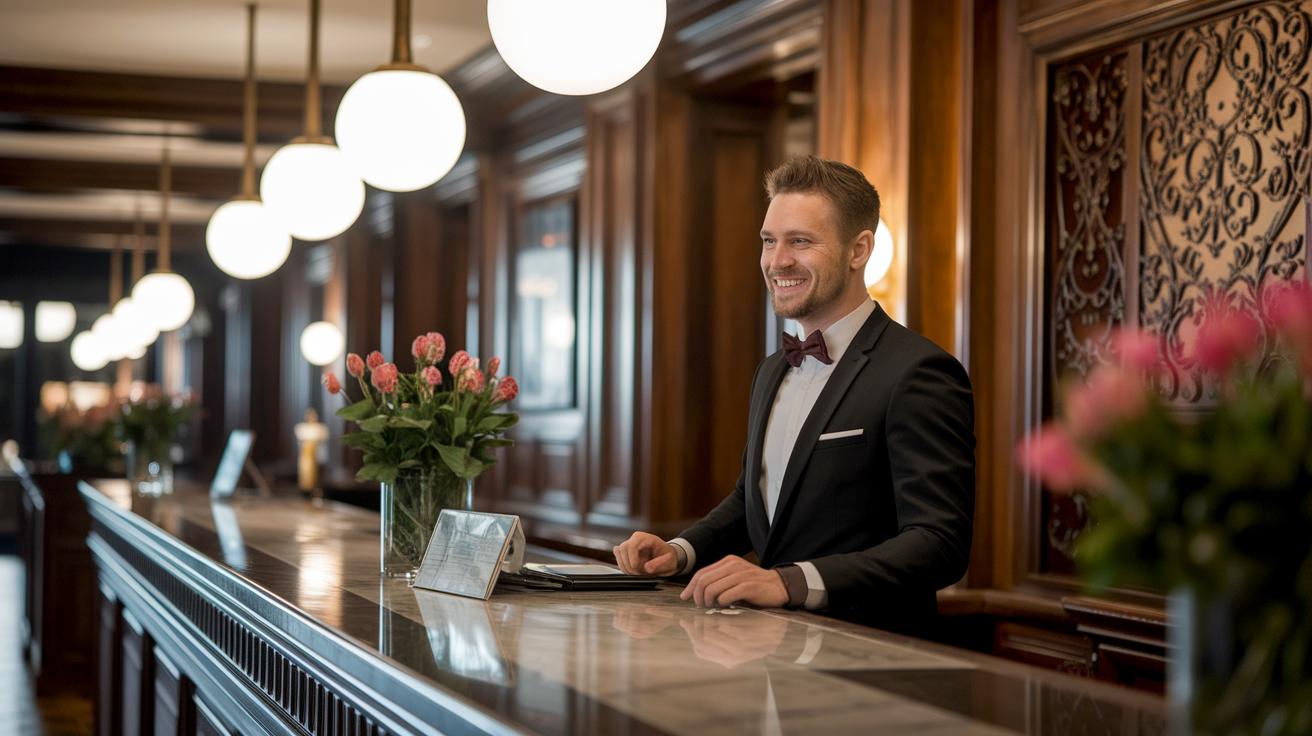
When you step into your hotel, a friendly, formal greeting in German goes a long way. Saying something like "Ich habe eine Reservierung auf den Namen…" sets a warm tone with the front desk, making your check-in feel as smooth as a gentle breeze on a sunny day. And when you ask "Wo ist mein Zimmer?" there's that little thrill of quickly finding your cozy room amidst the busy lobby hustle.
Check-In Expressions
Imagine arriving at your hotel and casually confirming your booking by saying, "Ich habe eine Reservierung auf den Namen…". Then, with a smile, you ask "Wo ist mein Zimmer?" to learn just where your room is waiting. It’s like chatting with a friend; using these courteous phrases shows you're ready for an easy, worry-free start to your stay.
Check-Out and Billing
When it’s time to check out, clear and friendly communication ensures everything wraps up without a hitch. A simple question like "Wie lautet Ihre Zahlungsart?" keeps things transparent. And if you need a little extra comfort, asking "Könnte ich bitte ein zusätzliches Handtuch haben?" shows you care about every little detail. This polite approach turns the check-out process into a pleasant, hassle-free goodbye.
Public Transportation Terminology for German Travel
When you're buying tickets in Germany, a few handy words can really smooth out your journey. Picture this: you're at a ticket booth and you hear someone say "einzelfahrkarte, bitte" – that means they're asking for a single ride ticket. Words like Bus, Taxi, Straßenbahn (that’s the tram), and U-Bahn (the metro) pop up all the time. Get to know that Fahrkarte means ticket, and you'll be ready to pick the right ride without any fuss.
And if you're wondering about schedules or need a little help with station details, a couple of simple questions can work wonders. Try asking, "Wann fährt der nächste Zug?" to find out when your next train is leaving. Or say, "Gibt es einen Fahrplan?" to get pointed to a timetable. When you're at a station, take a look at the signs, remember, in German, every noun gets a capital letter, making them stand out. With these easy phrases and tips, you'll feel at ease navigating the busy hubs of German travel.
Emergency German Phrases for Travelers
When you find yourself in a tricky spot or need urgent medical help, speaking clearly can really make a difference. In those moments, shout out “Hilfe!” if you need help right away. And if something serious happens, a kind yet firm “Rufen Sie einen Krankenwagen!” will call for an ambulance. If you're hurt and need quick assistance, simply say, “Ich habe mich verletzt.” These phrases are your travel safety net, giving you a calm and respectful way to ask for help.
When the emergency isn’t medical but you still need to be understood, clear words matter too. For example, if things suddenly go wrong or you feel unsafe, saying “Ich brauche einen Arzt” can make your worry known. Or just repeat “Hilfe!” to catch someone's attention. Using these expressions with the formal Sie form shows respect and makes sure you’re speaking to the right person.
Take some time to practice these phrases before you travel. It’s like packing your favorite travel snacks, you’ll be glad you did when you need them most. Remember, staying calm and speaking slowly makes it easier for emergency responders to understand your situation, just like having a friendly guide by your side in a bustling city.
Resources and Tips for Practicing German Travel Language
Try diving into audio apps and classic phrasebooks to boost your German skills. For instance, checking out audio lessons on apps like Wie Geht's German can be a real treat, listening to a native say "Guten Morgen" might remind you of enjoying a catchy tune. And if you're careful with your budget, apps like Learn German – Phrasebook offer a free start with cool extra features if you upgrade.
If your data is tight or you're off the grid, mobile apps like Learn German Phrases & Words: Phrases for Travel in Germany are a lifesaver. The Germany Travel Guide Offline even throws in helpful maps and phrase hints when you’re out exploring a new city. It’s like having a pocket cheat sheet guiding you with every step. When your phone pops up with "Bitte, ich bin verloren," you’ll instantly know what to do.
Now, mix things up with creative conversation practice. Role-play a few travel scenes with a friend or scribble down everyday encounters on a cheat sheet. Heading over to local meet-ups or language exchange events gives you a fun chance to try out your new phrases in real time. Imagine practicing "Entschuldigung, wo finde ich den Bahnhof?" with another traveler, it’s a delightful way to build confidence and connect with folks who love German travel language just as much as you do.
Final Words
In the action of exploring key German expressions, we covered useful phrases for greetings, asking directions, dining, hotel check-ins, public transport, and emergencies. Each section gave a quick toolkit that builds confidence when speaking German on the road. We also provided handy tips and resources to practice your language skills on the fly. Remember, a bit of preparation goes a long way in making travel smoother and more fun. Embrace these german phrases for travel and enjoy every moment, knowing you're well-prepared for your next exciting trip.
FAQ
Where can I find a German travel phrases PDF or cheat sheet?
The German travel phrases PDF provides clear phrases with translations and pronunciation. Many travel blogs and tourism sites offer free downloads covering basic greetings to useful expressions.
What are some German phrases for travel slang?
German phrases for travel slang include informal expressions locals use. They bring a relaxed vibe to conversations and often add a playful twist to everyday language during your travels.
Where can I find German travel phrases with pronunciation?
German travel phrases with pronunciation guide you through the correct sounds. They pair each phrase with a simple sound guide, making it easier to speak clearly while abroad.
Are there any funny German phrases available?
Funny German phrases mix humor with language, offering quirky sayings that can brighten your day. They add a lighthearted touch to your conversations and showcase local wit.
Is there a PDF with the 1000 most common German phrases for conversation?
A PDF featuring the 1000 most common German phrases is typically available on language learning sites. It’s a handy resource for boosting your everyday dialogue skills in German.
What are the top 5 German phrases?
The top five phrases often include greetings like “Guten Morgen”, “Danke”, “Bitte”, “Wie geht’s?”, and “Ich spreche kein Deutsch”, all essential for building confidence in German travel conversations.
What is the German word for a strong desire to travel?
The German word for a strong desire to travel is “Fernweh”. It perfectly captures the deep, personal longing to explore far-off places.
What is a famous German slogan?
A famous German slogan is “Vorsprung durch Technik”. This widely recognized phrase from Audi emphasizes innovation and quality in German design.
What is the German word for road trip?
The German word for road trip is often “Autoreise”. It refers to taking a car trip to explore scenic roads and enjoy the freedom of travel.